








 |
Incineration Fundamentals |
 |
INCINERATION FUNDAMENTALS
Beyond an isolated technical presentation of the aspects concerning incineration, we prefer to frame this “unitary process” and its multiple implementations within the set of resources or components of a synergistic solid waste management system , that is, combining it with the other classic components of such a system: minimization/ reduction of waste generation, recovery and recycling programs for valuable elements, composting programs and sanitary landfills .
 Therefore, rather than prescribing or promoting indiscriminate incineration, the objective of this material is to cover some of the most important aspects of its use and to reinforce the concept of incineration as an alternative, working "as a team" with other components to enable the most appropriate combination for a specific situation. It is often not possible to transplant "solutions" that encompass or absorb the wide variability of incineration applications. Cultural aspects, social habits, current legislation, different regional economies, as well as purely governmental or municipal aspects, all come into play—considerations that transcend a directive solely from the "field of engineering."
While we can affirm that there has been an increase in effective participation in recycling, waste minimization, composting, and recovery programs, incineration and landfill alternatives , even though they are economically and technically sound technologies, are necessary components. Although we are all aware of the considerable "unpopularity" of these last two options—a controversy reignited practically from the moment the potential location of a plant is proposed—negligence in addressing the issue, or its eventual delay, could lead to a critical situation that forces decisions that will later prove unfortunate. As with wastewater treatment, the technologies employed are well-known and have comparable experience.
Based on historical data on the evolution of solid waste management alternatives in, for example, the US, we see a decrease in the share of landfills (approximately 80% in 1980, approximately 67% in 1990), an increase in recovery/composting (approximately 7% in 1960, 13% in 1988, estimated at 25–35% for 2000), as well as an increase in the share of incineration (10% in 1980, 16% in 1990, estimated at 21% in 2000). This does not mean that the absolute quantities of waste to be processed have decreased, but rather that the proportion of each technology has changed. Therefore, we see that any feasible solid waste management program must be based on a collaborative/integrated approach to the various technologies.
It is important to note that the situation of non-municipal waste, which is not included in the usual municipal solid waste (MSW) statistics, is almost an order of magnitude larger. Among the non-municipal waste, we can highlight agro-industrial waste, construction waste, municipal sludge, combustion ash, cement industry waste, boiler waste, hospital waste, contaminated soils, extractive industries, refinery and gas waste, as well as a variety of other industrial sectors.
ROLE OF INCINERATION IN SOLID WASTE MANAGEMENT SYSTEMS
 Broadly speaking, two of the major advantages of incineration are the possibility of substantially reducing the volume— to one-ninth of the original—and the concrete potential for generating electricity or steam as a benefit of the operation . The selective use of ash in the construction sector adds a third compelling incentive. However, beyond these advantages, it must be remembered that in certain contexts, such as with certain hospital wastes, it is not possible to neutralize them by any known method , be it steam sterilization, microwaves, or disinfection. In some cases, certain solvents are so deeply integrated into the waste that their separation from the hospital waste is impractical. It is probably in this category, hospital waste, that incineration remains the primary or necessary alternative. Unfortunately, incineration alone does not solve the overall problem, given that the emission of particulate matter, the presence of plastic material (resulting in HCl), mercury vapor, lead, and the possible subsequent transformation of dioxins and furans must be taken into account.
Comparable to the great variability in the composition/characterization of solid waste of hospital origin, which is chronically heterogeneous, is the recent redefinition (much greater requirements, e.g., USA, Europe, Mexico) of permitted emission standards, which has led to a rethinking of configurations that could be called classic, e.g., the shift from requirements of 100 mg/m3 to values of 35 mg/m3 for particulate matter .
MOST COMMON TYPE OF INCINERATORS
Open-air incineration , the oldest and most rudimentary method, is still used, especially for destroying highly explosive materials. The material to be destroyed is placed on specially designed platforms. Single- chamber incinerators , with structures lined with refractory material, have historically been an alternative, at least in their larger sizes, primarily due to environmental problems similar to those encountered with open-air incineration. In some cases, efforts have been made to improve emissions control by using an additional burner.
Within contemporary “technologies” , we can probably limit them to three major configurations :
- Multi-chamber incinerators : These essentially consist of two chambers. The primary chamber is responsible for the combustion of solid waste, while the secondary chamber is responsible for the combustion of unburned gaseous products as well as solids, such as soot, both originating from the primary chamber. The two most common variants are the retort type (where the air is forced to follow a circuitous path) and the in-line type . While the retort incinerator has capacities between 9 kg/h and 340 kg/h, the in-line design handles capacities between 220 kg/h and 900 kg/h. In both cases, excess air is used, with approximately half entering through the feed door and the remainder distributed between the primary and secondary chambers. Design guidelines for both retort and in-line incinerators can be found in classic incinerator literature.
- Rotary incinerators: probably the most versatile system, its use is likely universal, especially for larger-scale applications, and there is a wide variety of modifications, e.g., parallel vs. countercurrent flow; intentional vs. non-slag operation; refractory wall vs. tube systems. The rotating cylinder operates between 0.5 and 20 rpm, with four distinct zones inside: drying, transformation, combustion, and incineration. It typically has a second residence time compartment of 2 seconds, which ensures the oxidation of any remaining hydrocarbons as well as the destruction of more stable organic constituents, achieving efficiencies of over 99.99%.
- Modular or starved air units (SAUs): Considered the first major standardized design for waste incineration, these typically consist of two chambers. The first chamber operates at just over 800°C (1500°F) with sub-stoichiometric air supply (e.g., 70–80%), while the second chamber reaches temperatures of nearly 1100°C (1400–2000°F) with an excess of 140–200% of the stoichiometric air required for complete combustion.
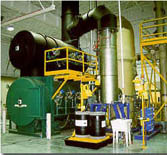 The "classic" arrangement shows the secondary chamber installed above the first chamber. Until recent legislation, this design was extremely popular, but the increased particulate matter requirements (30 mg/m³) have eroded its traditional competitiveness. Now, all units are required to have emissions control systems to comply with this standard (USA, Europe, Mexico) .
Without ruling out the incineration of industrial waste (which warrants a separate discussion), the two main application contexts for incineration systems are: 1. centralized municipal solid waste (MSW) or "field erected mass burn" facilities with capacities up to, for example, 3,000 tons/day with energy recovery, and 2. incinerators for infectious/pathological waste . In both cases, despite their high degree of specificity, there is a large body of knowledge and concrete experience that allows for the successful design and operation of these systems, often also aiming for energy recovery. As with sanitation programs, the technologies, their advantages, and disadvantages are well known. The technical aspects are now extremely well-quantified, and in many places, the lag is simply due to outdated regulatory frameworks, as is the case with the most important biological processes, whose patents expired long ago.
Sample keywords: hydrogen sulfide EGSB tannery (no commas!)