









 |
Membrane BioReactors Primer Need to know more? Send us an email or feel free to search our online series with our give away search engine: |
 |
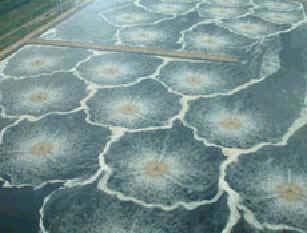
Aerobic treatment such as activated sludge and aerated lagoon applications is by far the greatest application of aeration equipment. Aeration is also used in water treatment operations for chemical oxidation of inorganic constituents such as iron, manganese and hydrogen sulfide. It is also used for odor control and/or oxygen content restoration.
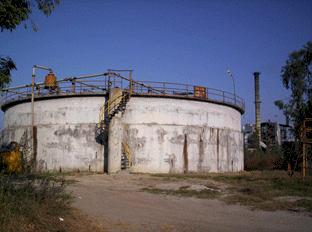
Suspended growth or activated sludge systems typically consist of some type of pretreatment followed by an aeration basin and a final solids separation unit. The purpose of pretreatment is to remove large suspended solids than can interfere with the mechanical features in biological treatment equipment or to reduce the organic load reaching the aeration basin. To a certain extent this arrangement may be the simplest configuration, i.e. a single-sludge design.
Numerous variations have been used for treating industrial as well as municipal wastewaters. Such variations include two stage activated sludge systems, combinations of fixed-film and suspended-growth systems, fluidized-bed reactors and membrane bioreactors. Other activated sludge arrangements basically do away with primary clarification and handle the load almost entirely.
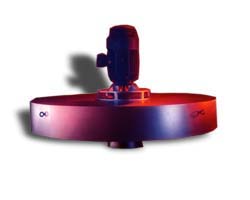
Most types and brands are suitable for activated sludge applications, but each has its own best applications. For example, brush aerators are best for oxidation ditches while fixed diffusers and surface aerators are best for conventional AS systems. The key is to size the unit properly for each application. Once OTR characteristics are established, the sizing is fairly straightforward. Other factors include alpha factor, impact of floc size and settleability, impact on effluent TSS, etc. The key phrase is "if properly sized/selected."
The inexorable increase in sanitary requirements in effluent treatment systems, as well as the progressive availability and competitiveness of different types of materials, has led to an increasing application of membrane-type filtration systems in effluent treatment plant environments.
In reality, rather than developing entirely new technologies, conceptually it's "simply" an extension of classic water conditioning systems—long used for process water, drinking water treatment, and other applications—into new areas. Naturally, and quite selectively, especially in small installations, we see successful examples of microfiltration and ultrafiltration implementing unit processes historically achieved using sand filters, mixed granule filters, and even secondary clarification.
As with any new field of application, concrete results don't always align with expectations, especially when those expectations are based on commercial literature. It's clear that both the industrial and municipal sectors are eager for better methods and alternatives, but as with the disappointment surrounding diffuse aeration technologies (re: Musterman; ASCE curves), evaluation in the field of "new ideas" takes time.
It's not easy for a consulting firm to design an MBR system. Although MBR membrane modules are available commercially, there are a lot of associated factors that deal with chemical compatibility of wastewater constituents with the membrane material, appropriate mixed liquor solids concentrations, membrane fouling, cleaning methods, etc. that must be addressed in first deciding to use MBRs and second selecting the correct type and size of membrane modules. It also is almost impossible to operated a lab-scale MBR for sufficient time and under the field-scale range of operation to identify the factors associated with membrane selection. For example, fouling can develop over the first year of two, so to simulate field conditions, the lab-scale MBR would need to be operated for this length of time. Companies such as ADI, Paques, Biothane, Xylem, GE etc. have spent millions on researching these factors.
Most membrane companies or MBR supplies will have pilot-scale membrane modules. It is recommended to design the system for side-stream membrane operation rather than in-basin modules so that you can control the membrane type and size easier, but in-basin modules -- like Kubota's -- make a simpler system without transfer pumps. Systems will likely need at least one full-time operator and associated capabilities for sampling and analysis.
We run lab-scale MBR pilots in the lab using 1 L reactors and filter the effluent through 0.2 um filters to simulate MBR performance. To run a true continuous-flow MBR pilot in the lab would require continuous feed with a lab scale MBR unit with pump and backwash mechanism. To simulate pressure drops and fouling, the pilot would need to be run at least three months.
Sample keywords: hydrogen sulfide EGSB tannery (no commas!)