


 |
Evaporative Condensers Need to know more? Send us an email or feel free to search our online series with our give away search engine: |
 |
EVAPORATIVE CONDENSERS: SERIOUS DRAWBACKS
I wish I could have found an opportunity to showcase and share more positive feedback/testimony but over the years I have unfortunately seen very disappointing results with what initially promoted as an improvement over classical shell and tube condenser and traditional cooling towers.
Marketing promise was lower Tc? Usually NOT realized because of drawbacks!
Partial list of long-standing issues encountered over the years...
0. Thermal deficit of around 50% after a short time; "zero safety margin" from the factory (re: the literature itself, e.g. see Baltimore Aircoil on Download section; direct evaporation over tube)
1. CE + "monstrous" receiver size + mandatory softener vs. simple shell and tube condenser + tower
2. CE very narrow design range: l/g = c. 1.17 and 600 fpm vs. cooling towers 0.8 - 2.2 and 300 - 725 fpm
3. Usually zero local repairability/recovery CE (need to regalvanize, available tanks may not be that large)
4. 0.75 mm scale or deposit -> 30% thermal de-rating
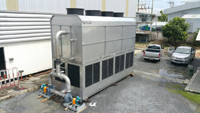
5. Small fan diameters -> higher BHP air section and underperforming units
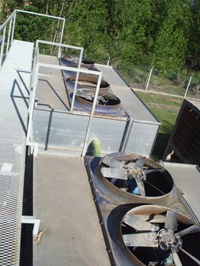
CAVEAT EMPTOR!
5a. Additionally, I guess it hurts a little bit to see polypropylene blade fans used for industrial service (ammonia ref). Subtract btu/hrs to equate next down HP motor size performance... e.g. 3 HP unit -> motor delivers air flow as if it were just 2 HP.
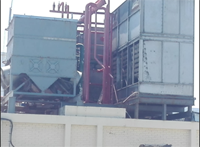
6. Forced draft in some cases plagued by recirculation!! -> Additional thermal de-rating 20-40%!!
7. Centrifugal fans 2x HP!
8. 4-pole motors (6-pole is a silent model!!)
9. High instantaneous variability – little/no thermal inertia for the worst moment; zero flywheel/hydraulic inventory (versus cooling in hours of significantly lower wet bulb values, colder water)
10. Long refrigerant line -> higher load/higher risk/enormous receivers – vs. water line
11. Chemical cleaning (acid/impractical in dense tube bundles) vs. simple mechanical cleaning of heat exchangers/condensers
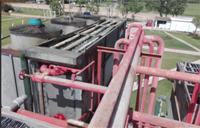
12. Side by side, vertical air intake/discharge in newer constructs, e.g. EC on top of crossflow tower - recirculation accounted for?
Current trend to smallest than small refrigerant charge tilts back way to go to traditional, well/generously designed shell and tube condensers and cooling towers.
As with some crossflow cooling towers users can recover/reuse/recycle existing evaporative condenser shells easily converting them to counterflow cooling towers, essentially replacing pugged coils with wideliy available tower media. Count on about 5-6 US GPM per EC section sq.ft.
Benefits
1. Lower/actual Tc
2. Higher/actual cooling/condensation capacity
3. Reuse of idle structures/casings
4. Lower refrigerant line/load/risk
5. Higher thermal inertia of the water inventory – flywheel effect
6. Widely available components – years of service!
Sample keywords: hydrogen sulfide EGSB tannery (no commas!)
